Device class and paths
Identify the equipment class, protective-earth path, accessible conductive parts, applied parts where relevant, and the leakage paths in scope.


Electrical safety method
Define the device class, applicable requirements, measuring circuit, operating condition, limits, and result path before specifying a leakage-current test.
Application overview
Leakage-current testing evaluates whether current flowing through insulation or accessible paths remains within the limit defined for the device and applicable requirements. The measuring circuit and test condition depend on the equipment class and use case.
Define the device under test, accessible parts, protective-earth context, operating and fault conditions, measuring circuit, frequency response, limits, sequence, and records before selecting a configuration.
Review the Schleich leakage-current methodRecovered catalog context
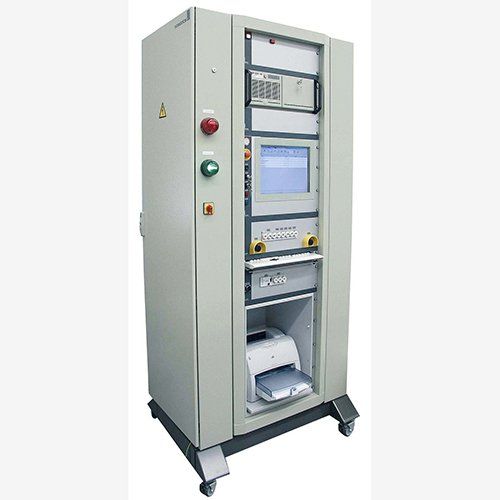
The captured GLP3 and GLP2 catalog pages listed leakage-current test capability and described multiple leakage-current measurement types within configurable safety and function test systems.
Those historical pages support the method and system context, but the applicable circuit, conditions, limits, and current product configuration must be confirmed against the device and current requirements.
System scope
A useful specification connects the checks being performed to the equipment, process, interfaces, results, and people responsible for the work.
Identify the equipment class, protective-earth path, accessible conductive parts, applied parts where relevant, and the leakage paths in scope.
Confirm the required measuring circuit, operating state, normal and fault conditions, supply arrangement, frequency response, and sequence.
Use the applicable requirement to establish limits, pass or fail logic, identifiers, result storage, documentation, and action after a failed test.
Application workflow
Use these steps to turn a broad application request into a current technical and support conversation.
Record the device class, supply, operating modes, accessible parts, protective-earth arrangement, and production or service stage.
Determine the required measurement type, circuit, operating and fault conditions, limits, and sequence.
Review contacting, probes, fixtures, switching, guarding, operator actions, discharge paths, and response to abnormal results.
Use MDS application review to confirm equipment, configuration, interfaces, documentation, training, calibration needs, and support.
Prepare for review
These inputs help MDS identify the right current product, test method, system, and support path without treating a general guide as a final specification.
Current next step
Share the equipment, process, test objective, interfaces, documentation needs, and support expectations so MDS can confirm the current fit.