Electrical safety
Identify which safety checks belong in the process, the applicable requirements, and how the result affects release or rework.


Lighting technology application
Bring electrical safety, functional behavior, contacting, production flow, and result handling into one lighting test conversation.
Application overview
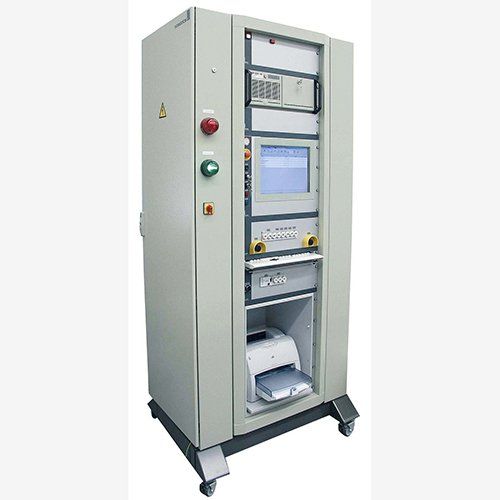
The recovered MDS GLP3 catalog included a semi-automatic luminaire test bench, lamp-adapter options, and an automatic test run. That evidence confirms a historical lighting-test application without implying that every prior component or configuration remains current.
Use the application review to separate the required electrical-safety checks from function, contacting, handling, result, and production needs, then confirm current compatibility and configuration.
Review the Schleich lighting technology overviewRecovered catalog context
The captured GLP3 material identified luminaire inspection and a semi-automatic luminaire test bench. It also showed a group of lamp adapters and described an automatic test sequence.
The capture does not establish current adapter compatibility, supported lighting protocols, or optical-inspection capability. Those points remain application-specific and must be confirmed before specification.
System scope
A useful specification connects the checks being performed to the equipment, process, interfaces, results, and people responsible for the work.
Identify which safety checks belong in the process, the applicable requirements, and how the result affects release or rework.
Define operating modes, contacting, inputs, outputs, and the functional decisions the station must support.
Clarify the fixture, adapter, operator, test-sequence, and result-handling needs that affect the station design.
Application workflow
Use these steps to turn a broad application request into a current technical and support conversation.
Document product variants, electrical characteristics, interfaces, production stage, and the decisions that testing must support.
Map required safety checks independently from function, contacting, control, and result behavior.
Review contacting, fixtures, operator tasks, cycle expectations, identifiers, records, and system interfaces.
Use MDS application review to confirm methods, configuration, documentation, commissioning, training, and support.
Prepare for review
These inputs help MDS identify the right current product, test method, system, and support path without treating a general guide as a final specification.
Current next step
Share the equipment, process, test objective, interfaces, documentation needs, and support expectations so MDS can confirm the current fit.