Operating stress
Review load, duty, starts, temperature, supply conditions, cooling, operating hours, process demands, and abnormal events.


Motor reliability decision guide
Motor life is an outcome of operating stress, environment, construction, condition, maintenance, failure history, and the decision the evidence must support.
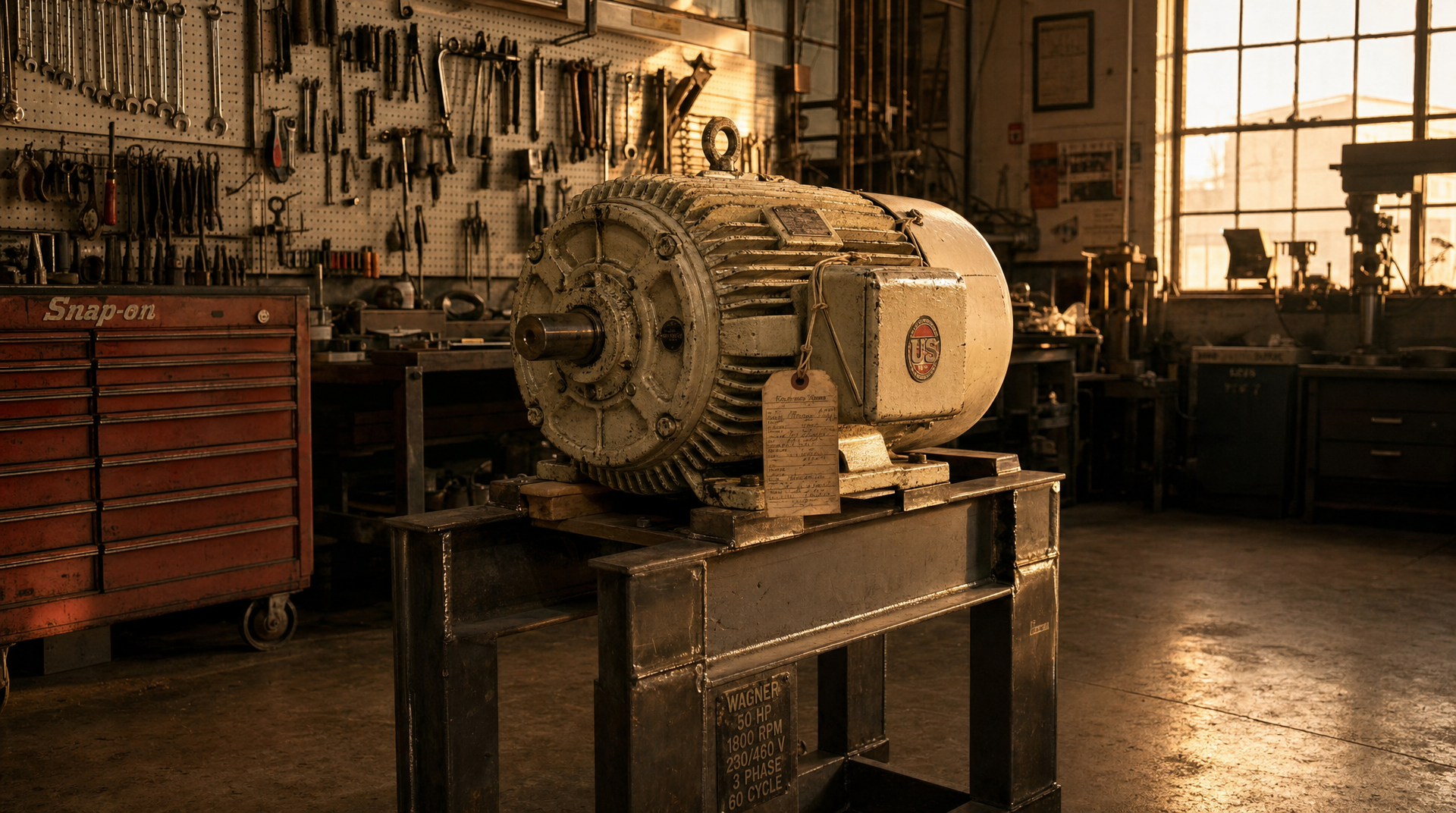
Application overview
Motor deterioration can reflect thermal, electrical, mechanical, environmental, and operational stresses. Load, temperature, power quality, starts, vibration, contamination, lubrication, storage, repair history, and the motor's design all influence the evidence and the remaining-risk decision.
A defensible assessment combines asset context, inspection, appropriate offline and online measurements, comparison with useful baselines, the likely failure mechanism, and the operational and economic consequence of repair, replacement, or continued service.
Review the U.S. Department of Energy motor-life guide Review EASA guidance on motor repair and efficiencySystem scope
A useful specification connects the checks being performed to the equipment, process, interfaces, results, and people responsible for the work.
Review load, duty, starts, temperature, supply conditions, cooling, operating hours, process demands, and abnormal events.
Consider bearings, alignment, vibration, lubrication, contamination, moisture, storage, enclosure, ventilation, and installation conditions.
Combine inspection, winding and insulation evidence, operating measurements, history, criticality, downtime, repair scope, replacement options, and decision risk.
Application workflow
Use these steps to turn a broad application request into a current technical and support conversation.
Record design, ratings, service, duty, load, environment, starts, cooling, maintenance, repairs, storage, criticality, and failure consequences.
Use inspection, history, operating data, and appropriate electrical and mechanical tests with consistent connections, conditions, corrections, and records.
Distinguish thermal, electrical, insulation, bearing, alignment, lubrication, contamination, supply, load, and process contributors before prescribing action.
Evaluate condition, efficiency, repairability, availability, downtime, operational risk, lifecycle economics, and the evidence needed to revisit the decision.
Prepare for review
These inputs help MDS identify the right current product, test method, system, and support path without treating a general guide as a final specification.
Current next step
Share the equipment, process, test objective, interfaces, documentation needs, and support expectations so MDS can confirm the current fit.