Station and line context
Define where testing occurs, how the unit arrives, what must be contacted, and what the station must return to the production process.


Production testing application
Connect the test sequence, station hardware, automation, results, and support plan before a production system is specified.
Application overview
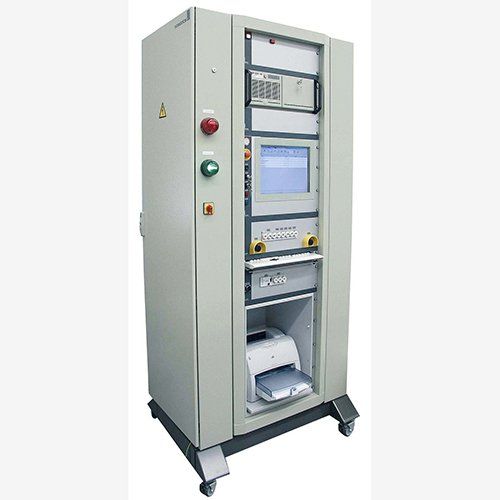
The recovered MDS catalog described GLP1-g for safety and function test sequences in manufacturing and automation, GLP3 as a configurable test-station platform, and MTC3 for manual, semi-automatic, and automated production-line winding tests.
That historical evidence confirms the application intent, but it does not prove that every prior configuration remains current. The MDS review should begin with the production process and required decisions, then confirm the current method set, interfaces, system fit, and support path.
Review the Schleich automation overviewRecovered catalog context
GLP1-g was presented for electrical-product and insulation-system testing, including production, quality management, and automation use. Its captured page also described configurable test sequences and stored results.
The captured MTC3 page described automatic test-step switching, evaluation of each step, reproducible pass or fail output, and use in automated production lines. These are historical catalog statements, so current availability and configuration still require confirmation.
System scope
A useful specification connects the checks being performed to the equipment, process, interfaces, results, and people responsible for the work.
Define where testing occurs, how the unit arrives, what must be contacted, and what the station must return to the production process.
Identify the required checks, sequence, cycle expectations, pass or fail logic, and the decisions the result must support.
Clarify identifiers, result handling, system interfaces, retention expectations, and who needs access to the records.
Application workflow
Use these steps to turn a broad application request into a current technical and support conversation.
Bring the part or assembly, production stage, handling method, available space, and operator role into the first review.
Separate required electrical checks from mechanical handling, safety, process-control, and documentation needs.
Identify contacting, controls, data exchange, identifiers, upstream inputs, and downstream actions that affect system design.
Plan commissioning, training, service, calibration documentation, and the route for future changes or support.
Prepare for review
These inputs help MDS identify the right current product, test method, system, and support path without treating a general guide as a final specification.
Current next step
Share the equipment, process, test objective, interfaces, documentation needs, and support expectations so MDS can confirm the current fit.