Motor and winding
Document ratings, winding construction, connections, rotor and stator context, access points, operating state, and production or service stage.


Motor testing application
Connect the induction motor, winding condition, operating context, likely fault mechanisms, and required decision before selecting test methods.
Application overview
An induction motor can present questions about conductor condition, ground-wall insulation, turn insulation, phase balance, rotation, operating behavior, or the surrounding power and mechanical system. Those questions do not all use the same test method.
Start with the motor design, ratings, connections, operating or offline state, symptoms, history, and decision required. Then define the method sequence, comparison basis, limits, records, and response to an abnormal result.
Review the Schleich motors and windings rangeRecovered catalog context
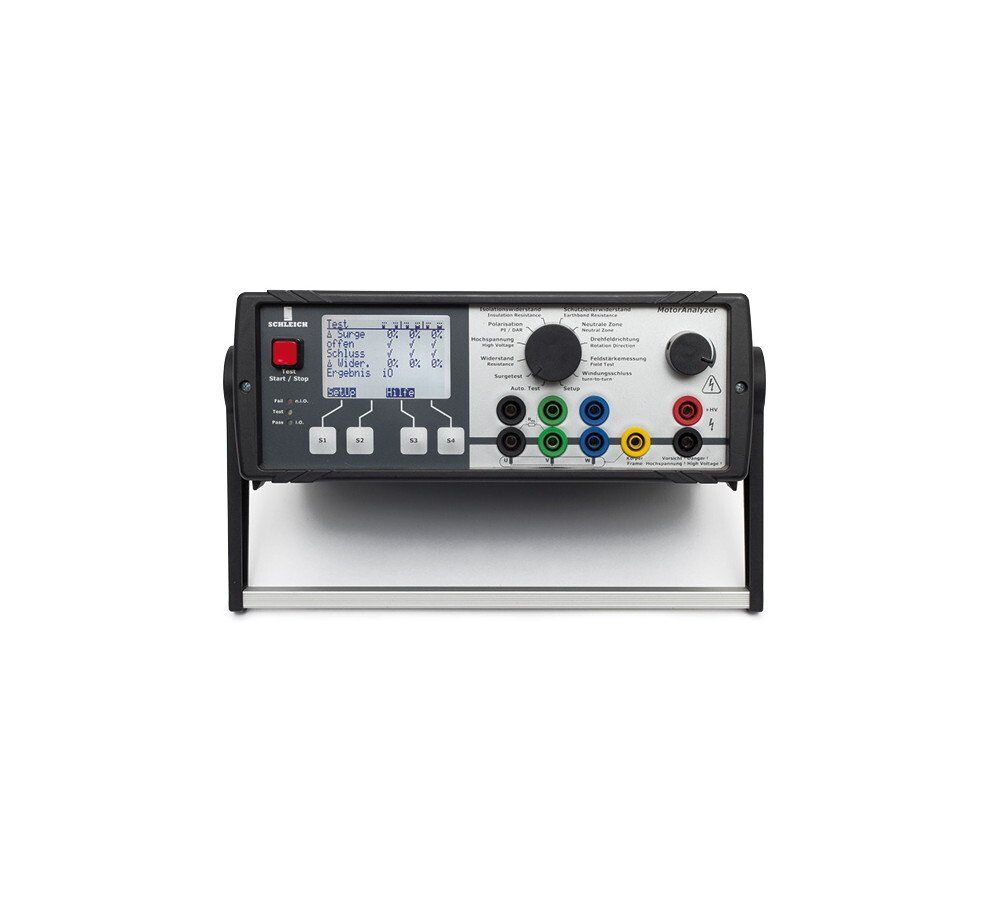
The captured MotorAnalyzer3 catalog identified asynchronous and induction motors as supported application types. The captured MTC3 material described configurable winding, safety, and functional test methods.
Those historical sources confirm the application route and product-family context, but they do not establish the correct current configuration for a specific motor.
System scope
A useful specification connects the checks being performed to the equipment, process, interfaces, results, and people responsible for the work.
Document ratings, winding construction, connections, rotor and stator context, access points, operating state, and production or service stage.
Separate conductor, ground-wall insulation, turn-insulation, supply, operating, and mechanical questions before choosing methods.
Define the baseline, phase comparison, applicable requirements, limits, trend or acceptance logic, and action tied to each result.
Application workflow
Use these steps to turn a broad application request into a current technical and support conversation.
Record the motor design, ratings, load, connections, operating environment, production or service stage, symptoms, and available history.
Identify which winding, insulation, operating, power, or mechanical conditions are actually in scope.
Choose methods, connections, corrections, comparisons, limits, and records around the required decision rather than one general motor score.
Review current equipment fit, configuration, fixtures, documentation, training, calibration needs, and service with MDS.
Prepare for review
These inputs help MDS identify the right current product, test method, system, and support path without treating a general guide as a final specification.
Current next step
Share the equipment, process, test objective, interfaces, documentation needs, and support expectations so MDS can confirm the current fit.